
Across Mexico’s top beach markets, the destination itself is only part of the story. The property you choose often determines the experience.
Mexico isn’t one destination. It’s five distinct travel markets, each moving at its own pace and attracting its own traveler. The property you choose often matters more than the region you pick. That is where the planning conversation should start.
To understand how these markets are actually functioning today, UJV Tropics Destination Specialists spent time on the ground across key luxury destinations, evaluating the experience in real time by walking properties, speaking with leadership teams, and observing how each market operates.
When a client says “Mexico,” the real question is usually which version of Mexico they actually mean. The destination only works when the property and the traveler are aligned.
Puerto Vallarta, Riviera Maya, Tulum, Playa Mujeres, and Los Cabos may share a country, but they deliver very different experiences. Property style, rhythm, energy, and guest mix vary significantly from one region to the next.
The only reliable way to understand how those markets are actually functioning is to be on the ground.
What stood out most was how steady and familiar everything felt.
The gap between what is being said and what is experienced becomes clear the moment you arrive. We went to Mexico to experience it firsthand, and what we found was a destination operating with the same consistency travelers have long expected.
Airports were calm. Transfers moved smoothly. Guests were arriving and moving comfortably through each destination.
Despite broader headlines, roads throughout the region feel normal and comfortable to navigate.
Local Perspective: What Puerto Vallarta Leadership Is Seeing
One advantage of being on the ground is hearing directly from the people running these destinations every day.
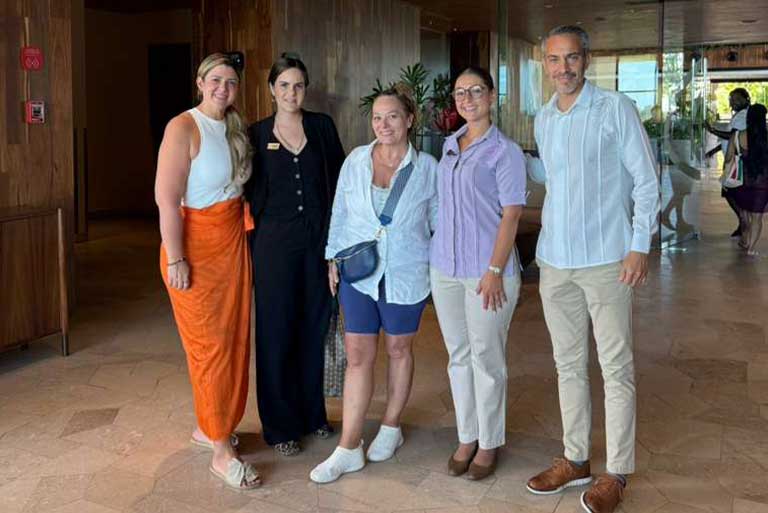
During our time in Puerto Vallarta, the UJV team spent time with Juan Vela Ruiz, CEO of Velas Resorts, discussing what he is seeing across the destination.
Ruiz offered a useful read on current booking patterns. What can look like softness in the numbers is often standard wholesale cycle behavior. Rooms are held while travelers finalize decisions, not cancelled.
Occupancy levels are running closer to shoulder season, which works in the traveler’s favor: easier access to preferred rooms, restaurants, and spa appointments without sacrificing service quality.
The day-to-day rhythm of tourism in Vallarta remains steady. Guests are arriving, hotels are welcoming visitors, and the experience on the ground continues to feel consistent with what travelers expect, just with a little more breathing room.
Arrivals and Transfers: Logistics Work Smoothly
Logistics become simple when transfers are coordinated correctly.
The new Tulum Airport stood out immediately. It is noticeably smaller and quieter than Cancun International, which makes the arrival process easier. The airport feels organized, and access to the main road is quick and straightforward. For clients staying in Tulum’s hotel zone, the drive is typically about one hour, a meaningful improvement compared with the two to two-and-a-half hour transfer from Cancun.
Puerto Vallarta’s airport offers a similar experience, with travelers moving easily through the terminal and the overall atmosphere feeling relaxed and typical for the destination.
Los Cabos International Airport feels the same on both arrival and departure.
Transfers with Mayakoba Experience were smooth. Vehicles are white luxury SUVs equipped with Wi-Fi, phone chargers, cold towels, and a cooler stocked with water, soda, beer, and snacks. For families traveling with children, the company even adds small touches like juices and Xbox consoles during the drive. Everything is included in the transfer price, which makes the experience feel seamless from the moment clients leave the airport.
Roads throughout the region feel normal and comfortable to navigate. The drive toward Tulum along the beach road is smooth, with newly improved stretches making the final approach efficient.
The takeaway is simple.
Mexico logistics remain easy to manage when transfers and arrival services are arranged thoughtfully. From airport to resort, the experience feels structured, predictable, and seamless.
Tulum: Design-Driven Travel With a Social Edge
Tulum attracts a very specific type of traveler.
It is less about traditional luxury and more about atmosphere. The destination leans heavily into design, aesthetic identity, and a relaxed social energy that feels very different from the larger resort markets elsewhere in Mexico.
At Nômade Tulum, that philosophy is clear immediately. The property blends concrete architecture with jungle surroundings, open-air spaces, and a distinctly bohemian design language. Guests move barefoot through much of the resort, and dining spaces are intentionally informal, with lounge seating and low tables arranged directly in the sand.
The one-bedroom suites stand out as the most versatile accommodation category. They feel residential in scale, with large living areas, plunge pools, and in some cases full kitchens. These suites work particularly well for couples, girlfriends’ trips, or families traveling with younger children who benefit from extra space.
Advisor note: not every accommodation style in Tulum will suit every luxury traveler. Some rooms are designed as tented accommodations, which may not appeal to clients expecting traditional hotel construction. The suites are generally the safest recommendation for most clients.
A few additional observations from the ground:
- The beach stretch here feels wider than in many parts of Tulum
- The guest mix is highly international
- The overall energy is social and relaxed rather than highly polished
Because the resort sits within a jungle environment, wildlife becomes part of the setting. Birds are common, and local raccoons occasionally appear around balconies, especially if doors are left open overnight.
In Tulum, the experience is driven by atmosphere and design, which is exactly what draws its core traveler.
Riviera Maya: Structured Luxury and Multi-Generational Travel
Riviera Maya is one of Mexico’s most reliable luxury resort markets.
The region tends to attract travelers looking for a polished beach experience with reliable service and resort infrastructure.
At Grand Velas Riviera Maya, that structure becomes clear in how the property operates. The resort is organized into three distinct sections: Grand Class near the beach, Ambassador with many of the larger suites, and Zen Grand positioned further back within the jungle.
Guests move easily between beach, pools, and restaurants throughout the day, with resort shuttles running consistently between each section.
Dining is one of the property’s strongest operational advantages. Standout venues include Piaf for French cuisine and Frida for Mexican dining, while The Bistro offers a relaxed lunch atmosphere that still reflects the service standards seen throughout the resort’s evening venues.
The adults-only pool remains calm even when the resort reaches moderate occupancy, while family programming continues to expand through offerings like a teen club and a dedicated kids spa.
Grand Velas Riviera Maya continues to be one of the most dependable luxury all-inclusive placements in Mexico, particularly for families and multi-generational travelers.
Advisor cue: when a client wants a luxury all-inclusive that feels structured, polished, and consistently executed, Grand Velas is often the most reliable place to begin.
Playa Mujeres: Energy, Scale, and Social Travel
Playa Mujeres has developed into one of the most active resort corridors in the Cancun area.
The destination tends to attract travelers who prefer larger properties with a lively atmosphere, expansive dining options, and a steady level of activity throughout the day.
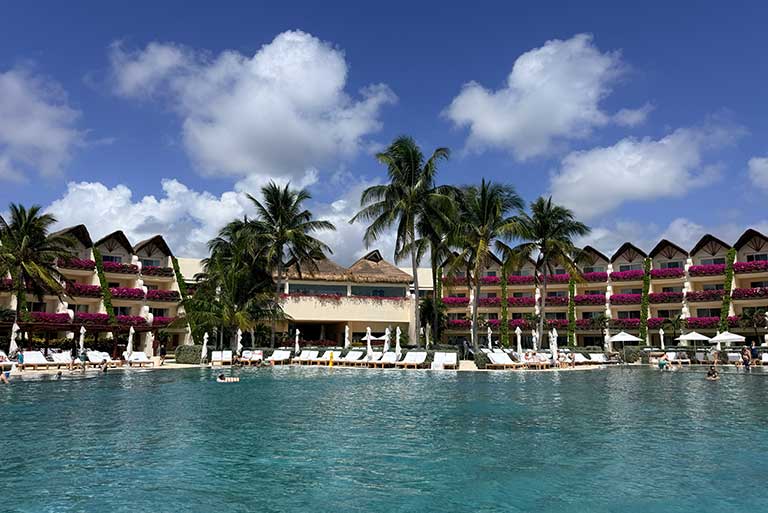
At Atelier Playa Mujeres, that scale becomes immediately apparent. With roughly 700 rooms, the resort maintains a constant rhythm of activity, with restaurants busy, the fitness center active, and multiple wedding groups often rotating through the property.
Rooms are modern and spacious, with layouts that work well for longer stays. Bedding quality stood out during our visit, and the bathrooms feel private and comfortable for longer stays.
Guests booking Inspira rooms receive a more elevated experience that includes:
• Separate check-in
• Private rooftop pool access
• Dedicated beach areas
• Additional service layers
Inspira guests also receive access to a VIP departure lounge at Cancun Airport, which helps smooth the departure experience during busy travel periods.
Positioning matters here.
Atelier works best when the client wants energy, scale, and a social atmosphere rather than a quiet boutique resort. The guest profile tends to skew slightly younger, and the overall pace of the resort reflects that.
Puerto Vallarta: A Destination With a City Rhythm
Puerto Vallarta offers a rhythm that feels different from many beach destinations in Mexico.
Because the city sits along the curve of Banderas Bay, Vallarta blends resort relaxation with a genuine urban rhythm. Travelers can spend the day on the beach and still experience restaurants, galleries, and the waterfront promenade in the evening.
At Grand Velas Riviera Nayarit, the experience remains consistent with what advisors typically expect from the Velas brand. Service is attentive, dining programs are strong, and the overall environment feels lively yet balanced.
Even at moderate occupancy, restaurants remain active and the resort maintains a comfortable level of energy. Dining highlights include Piaf for French cuisine, Frida for Mexican dining, Lucca for Italian cuisine, and Selva del Mar for relaxed beachfront lunches.
One accommodation category worth noting is the Grand Terrace Suite. Recently renovated and located at the top of the property, these suites offer panoramic ocean views and private jacuzzi terraces.
Beyond the resort, Vallarta’s city life adds another dimension.
In the evenings, visitors walk along the Malecón as the sun sets over the bay, moving between waterfront restaurants, galleries, and beach bars. Street performers gather along the promenade, and both locals and travelers fill the waterfront as the evening air cools.
For many clients, that balance becomes one of Vallarta’s biggest advantages: resort relaxation during the day, followed by dinner in town or a walk along the waterfront.
Los Cabos: One of Mexico’s Most Consistent Luxury Markets
Los Cabos continues to operate as one of the most stable luxury markets in Mexico.
The destination sits where desert landscape meets a concentrated cluster of high-end resorts, making it one of the most consistent luxury markets in Mexico.
Across the destination, travel between properties remains easy, and hotels maintain typical occupancy levels while continuing to deliver strong service standards.
At Esperanza Auberge Resorts Collection, the atmosphere remains intimate and romantic, particularly appealing for couples and families seeking privacy.
Dining at Cocina del Mar stood out during our visit, especially dishes like the shrimp mac and burrata paired with a strong cocktail program.
At Solaz Los Cabos, the guest mix skewed toward couples and families in the 35–50 range. Rooms are modern, food quality remains strong, and service levels have improved noticeably compared with previous visits. Public spaces such as Mako Bar and the pool areas remain lively throughout the day.
Nearby properties like Zadún, a Ritz-Carlton Reserve, add architectural depth to the luxury landscape in Los Cabos.
Meanwhile, Grand Velas Boutique Los Cabos offers a quieter adults-only experience with attentive butler service and standout dining at Loto Robata Grill.
Advisor note: many beaches in Los Cabos remain non-swimmable due to strong currents, so matching the property to the client’s expectations around beach access remains an important part of the planning conversation.
Start With the Property, Not the Map
Mexico sells best when the conversation starts with property fit, not geography.
Each region operates with its own energy, pace, and client profile. Match the client to the property first. The destination follows.
A few simple questions usually clarify the right placement:
Is the client looking for intimacy or energy?
Adults-only or family-focused?
Boutique scale or large resort?
Design-driven atmosphere or structured luxury?
Once that alignment is clear, the rest of the planning becomes much easier.
The strongest Mexico itineraries start with the right property. From there, the rest of the planning falls into place. The UJV Tropics team helps make that call from the start.