
The spa at Zemi Beach House in Anguilla is housed in a 300-year-old wooden structure from Thailand. The owner had it taken apart piece by piece, shipped across the world, and rebuilt on Shoal Bay East, where it has stood for three centuries with the Caribbean just outside its walls.
These Hilton luxury properties across Mexico, Costa Rica, and the Caribbean each have a detail like that: a spa treatment dictated by the phase of the moon, a tunnel carved through granite, a resort where shamans blessed the land before the first room was built, a beach that stays swimmable on a coastline where most cannot.
Together they represent Waldorf Astoria, Conrad, and LXR Hotels & Resorts, three brands that make up Hilton’s luxury portfolio across the region.
Travelers have done Cancún. Los Cabos too. Somewhere along the way, they’ve probably done an all-inclusive along the coast. And at some point they start asking whether there is a version of this region they have not seen yet.
There is. Six of them, in fact.
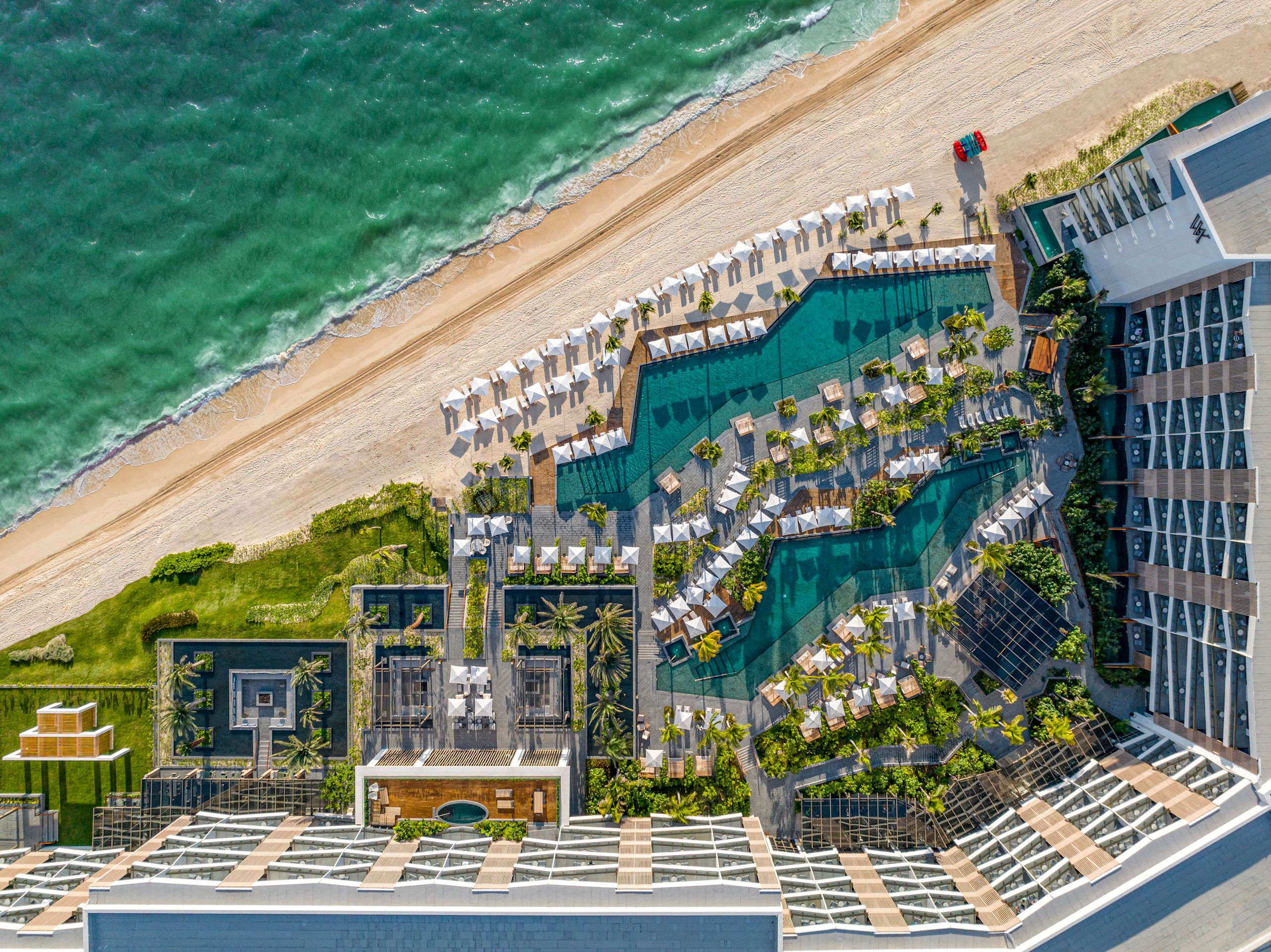
The Riviera Maya | Waldorf Astoria Riviera Maya
The Riviera Maya usually begins with two different ideas: the all-inclusive and the luxury hotel. Along much of the coastline, they lead to different recommendations. Waldorf Astoria Riviera Maya is one of the few places where they meet.
The property sits on 100 acres of protected mangrove forest between Playa del Carmen and Tulum. Fifteen minutes after leaving Cancún airport, the road has already narrowed into mangroves and ceiba trees, and the Caribbean appears almost suddenly on the other side.
173 rooms, every one facing the sea with a private balcony, soaking tub, and in select categories a private plunge pool, alongside a spa that at 40,000 square feet draws from Mayan healing traditions in ways that feel specific to this part of Mexico. Before any treatment begins, a therapist performs a limpia using copal resin smoke, a cleansing ritual practiced in the Yucatán for centuries.
The property now offers an all-inclusive plan, the first Waldorf Astoria has offered in Mexico. Most of the Riviera Maya forces a choice between luxury and all-inclusive. This is the rare place that doesn’t. Malpeque is the beachfront restaurant under Chef Mauricio Lazcano, where grilled octopus, lobster, and colossal shrimp come with ocean views and the kind of service that makes the all-inclusive label feel like a footnote.
This is a property for travelers who love all-inclusive luxury and are not willing to compromise on either.
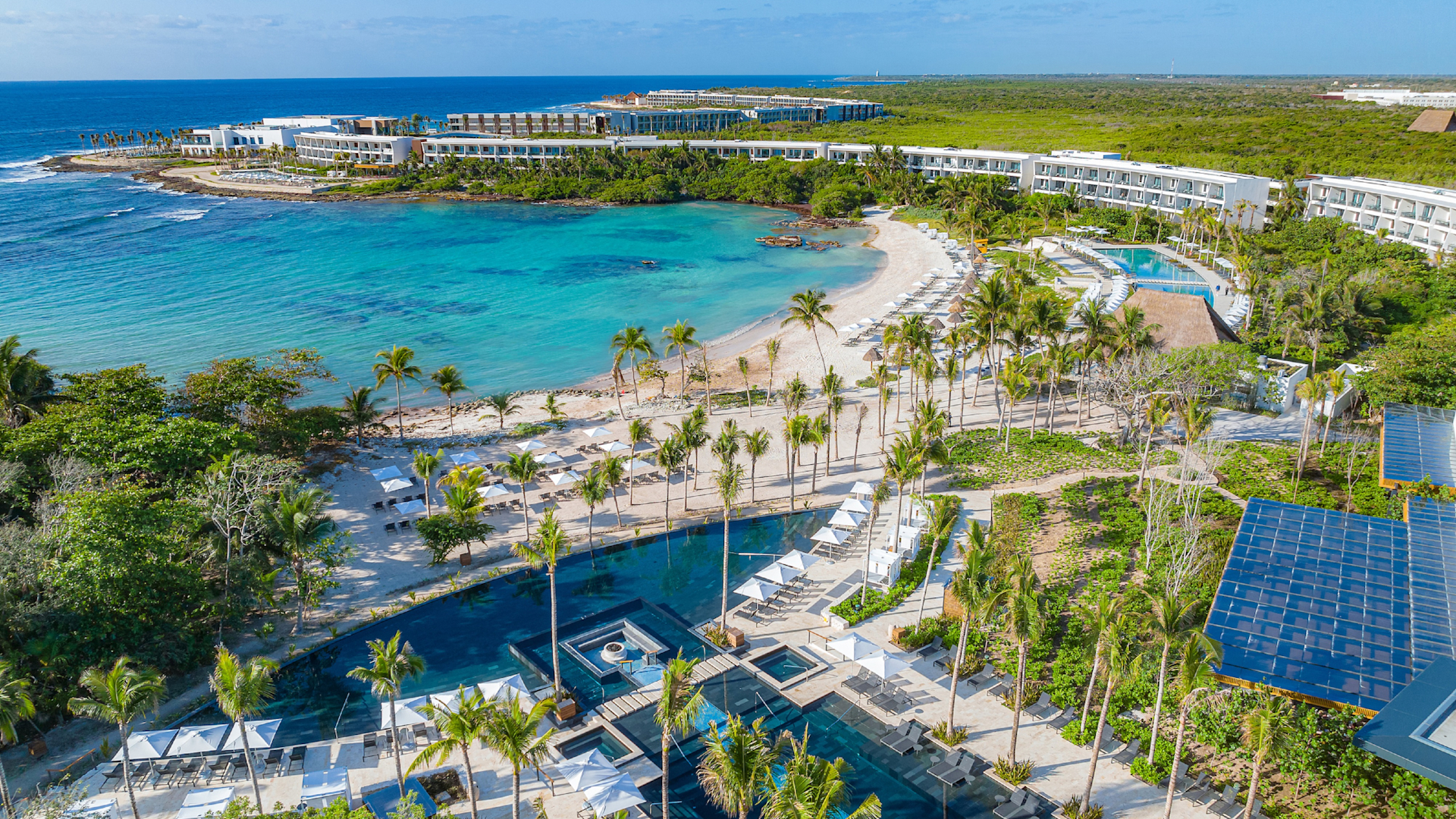
Tulum | Conrad Tulum Riviera Maya
Tulum spreads out more than most first-time visitors expect. The archaeological site, the hotel zone, the town, the cenotes, and Sian Ka’an all sit in different parts of the destination. Getting between them takes more planning than the version of Tulum that circulates on social media suggests.
Conrad Tulum Riviera Maya sits on a private cove north of the main area, completely isolated. That seclusion is the point of the property, though it also means taxis into Tulum town add up quickly.
What most people don’t know is that the resort sits directly alongside 54 acres of protected mangrove forest that the property actively maintains. The jungle runs right up to the rooms. Before anyone has visited the archaeological site or stepped into town, the destination is already outside the window.
349 rooms and suites, most starting at over 1,000 square feet, with five pools including a large central infinity pool and smaller onyx-tiled reflective pools. The spa draws from Mayan healing traditions, with each treatment beginning in a copal cleansing ceremony and a temazcal with a local healer available for travelers who want to go deeper. When travelers do venture out, Tulum Archaeological Site is 14 miles away, and the Mayan Train now runs from Cancún along the eastern coast.
It suits travelers who want Tulum on their own terms.
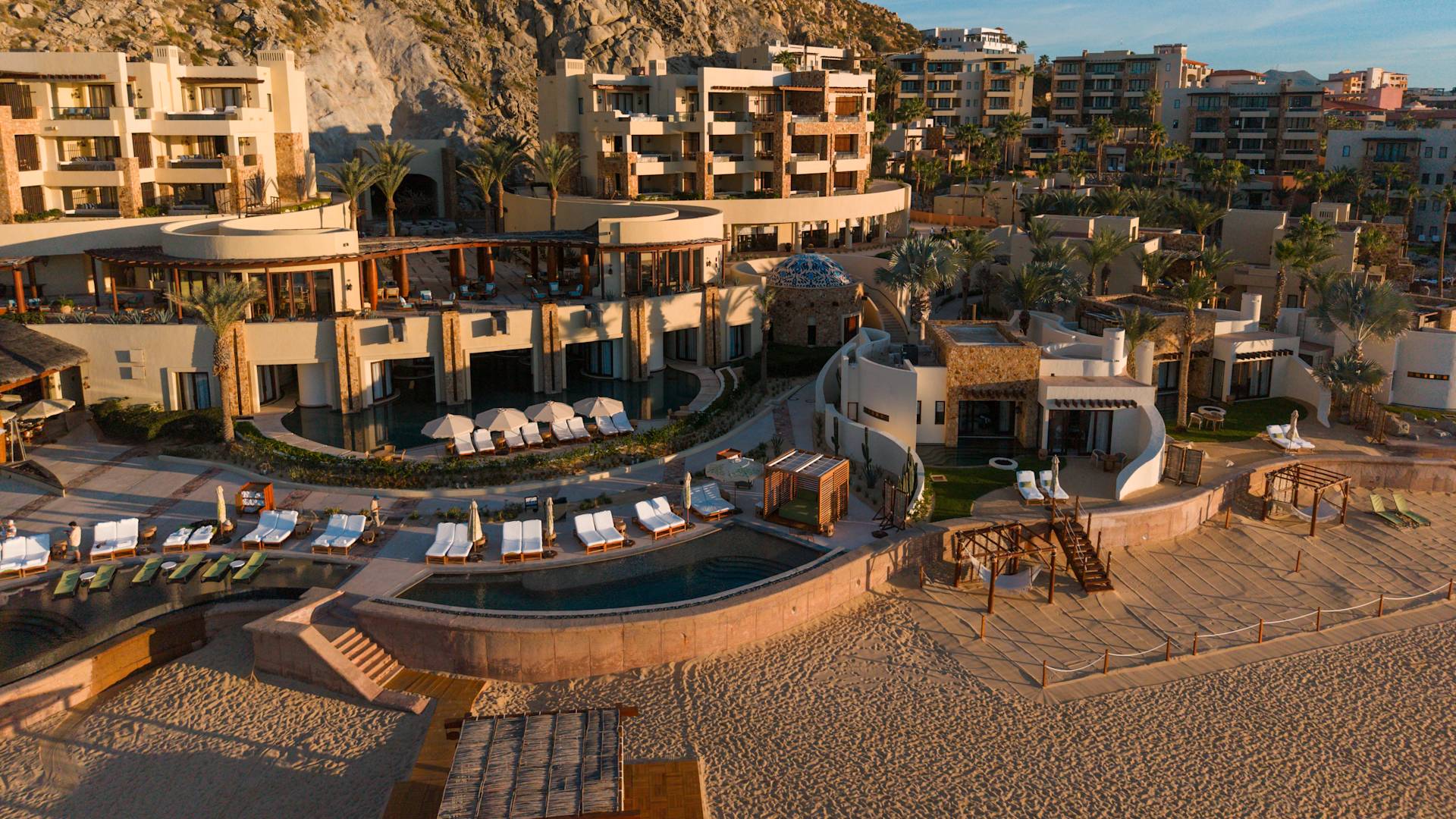
Los Cabos | Waldorf Astoria Los Cabos Pedregal
The Pacific side of Los Cabos is where the waves break.
Dramatic, crashing waves rather than the calmer Sea of Cortez. Whale watching season running through spring. Privacy that the corridor cannot replicate. And minutes from the nightlife of Cabo San Lucas for travelers who want both.
Waldorf Astoria Los Cabos Pedregal sits on this side of the peninsula, reached through the Dos Mares tunnel, a private road carved entirely through solid granite mountain, a detail that brings the greatest surprise here for most travelers.
The moment the mountain closes behind them is the moment the stay begins. The beach is genuinely swimmable, which on the Pacific side of Los Cabos is rarer than most people realize. Every one of the 112 rooms faces the ocean with a private plunge pool on the terrace as the baseline. El Farallón on the cliffs runs whatever came out of the water that morning. The spa follows the phases of the moon, with the lunar cycle dictating the scents and techniques used on any given day.
The marina is walkable from the tunnel exit. Board a boat to El Arco, where the rock arch marks the tip of the Baja peninsula and the Pacific meets the Sea of Cortez. Head into Cabo San Lucas for lunch by the marina or an evening out.
Position Pedregal after travelers have already done the corridor once. The tunnel, the Pacific setting, and the private beach become the reasons to come back to Los Cabos.
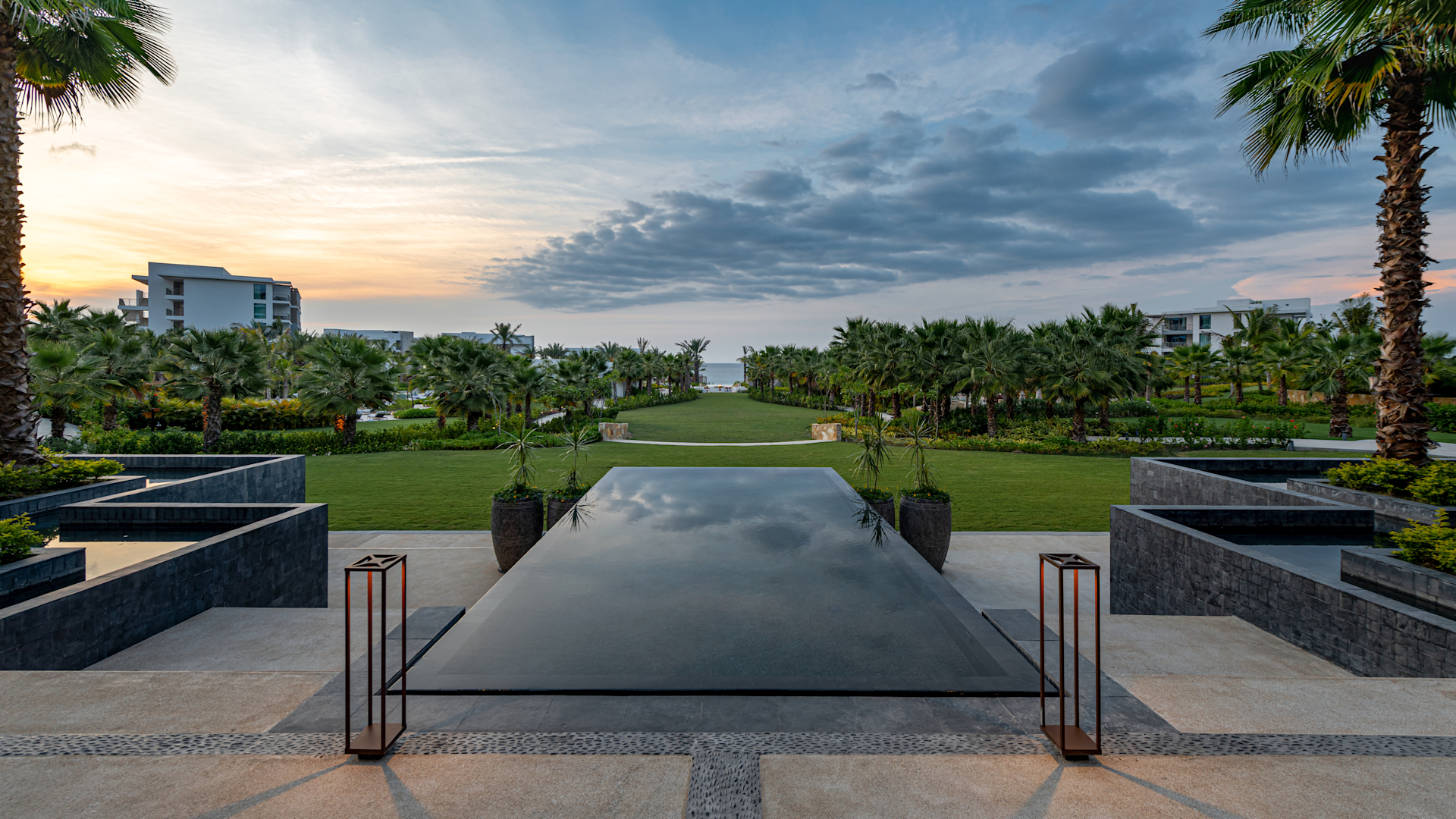
Riviera Nayarit | Conrad Punta de Mita
Los Cabos is desert and drama. The Riviera Maya is beach corridor and jungle. Riviera Nayarit is something different. Lush, tropical, slower, with a Pacific coast that still feels like it belongs to the people who live there.
The towns matter here in a way they do not in Los Cabos. Sayulita for surf culture. San Pancho for galleries, community art, and a slower village atmosphere. Punta Mita for seclusion.
Conrad Punta de Mita sits inside an exclusive gated community about 20 miles north of Puerto Vallarta airport, adjacent to Higuera Golf Club, an 18-hole Greg Norman design that runs along the coastline.
The Huichol symbols carved into the guest room headboards are Ojo de Dios (God’s Eyes), a spiritual tradition of the indigenous Huichol people of western Mexico. It’s one of those details worth mentioning before arrival. Travelers tend to notice the symbols once they know what they’re looking at.
That same connection to local tradition continues at the Conrad Spa, where a temazcal is led by a local shaman. Throughout the resort, Riviera Nayarit feels present in ways that go beyond the landscape.
The resort offers 324 rooms, most with ocean views and private terraces, with select suites adding private plunge pools. Buildings sit apart from each other, with sightlines opening toward the Pacific from almost everywhere. An infinity pool, a family pool with a splash pad, an adults-only pool with a swim-up bar, seven restaurants and bars, and Codex on the beachfront give travelers plenty of reasons to spend time on property.
Six miles down the coast, Sayulita adds another layer of Riviera Nayarit. The streets are painted in color, the Friday market fills with handmade jewelry and street food, galleries and cafés spill onto the sidewalks, and the surf break has made the town one of the destination’s best known.
Costa Rica | Waldorf Astoria Costa Rica Punta Cacique
The Pacific in Guanacaste feels different from the rest of Costa Rica. The rainforest gives way to tropical dry forest. The beaches widen and the coastline opens toward the Gulf of Papagayo.
Most Costa Rica itineraries follow a familiar sequence. Arrive in San José. Drive to Arenal for the volcano and the hot springs. Continue to Monteverde or Río Celeste. Then the beach.
Guanacaste is where that sequence ends, and where it can become something more than a final stop.
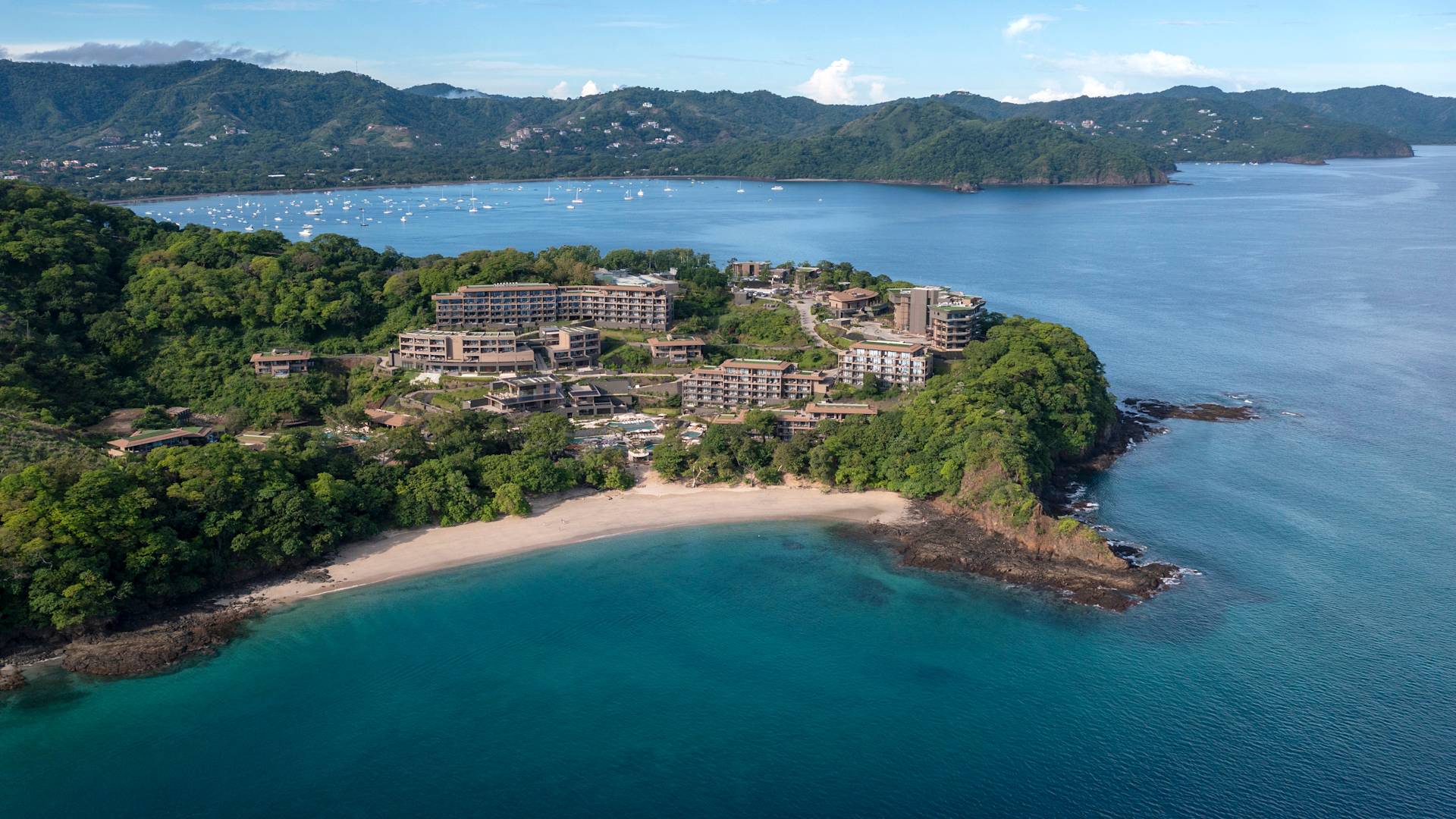
Waldorf Astoria Costa Rica Punta Cacique opened in April 2025 as the brand’s first property in Costa Rica, on a 600-acre peninsula above Playa Penca, 17 miles from Liberia airport. The resort is built vertically into the cliffside, with pools, terraces, and dining at different elevations carved into the jungle. Nine pools cascade down toward the Pacific 300 feet below the lobby.
The Nicoya Peninsula, one of only five Blue Zones in the world, runs along the edge of the property. The spa draws from Chorotega healing traditions and uses honey harvested from native stingless bees in its signature treatments. La Finca sources from local farms and fishermen. The Guest Practitioners Program rotates specialists through the property throughout the year, a nature photographer one month and a longevity expert the next.
Guests board a Zodiac from Playa Penca to a catamaran anchored offshore. Looking back from the water, the resort steps down through the cliffs toward the ocean framed by forest on one side and the Gulf of Papagayo on the other.
Guanacaste is often treated as the beach finish to a Costa Rica itinerary. Punta Cacique fits naturally after Arenal or Monteverde. Works just as well as a standalone Guanacaste stay.
Anguilla | Zemi Beach House, LXR Hotels & Resorts
The Caribbean has no shortage of beautiful islands. Anguilla chose a different path.
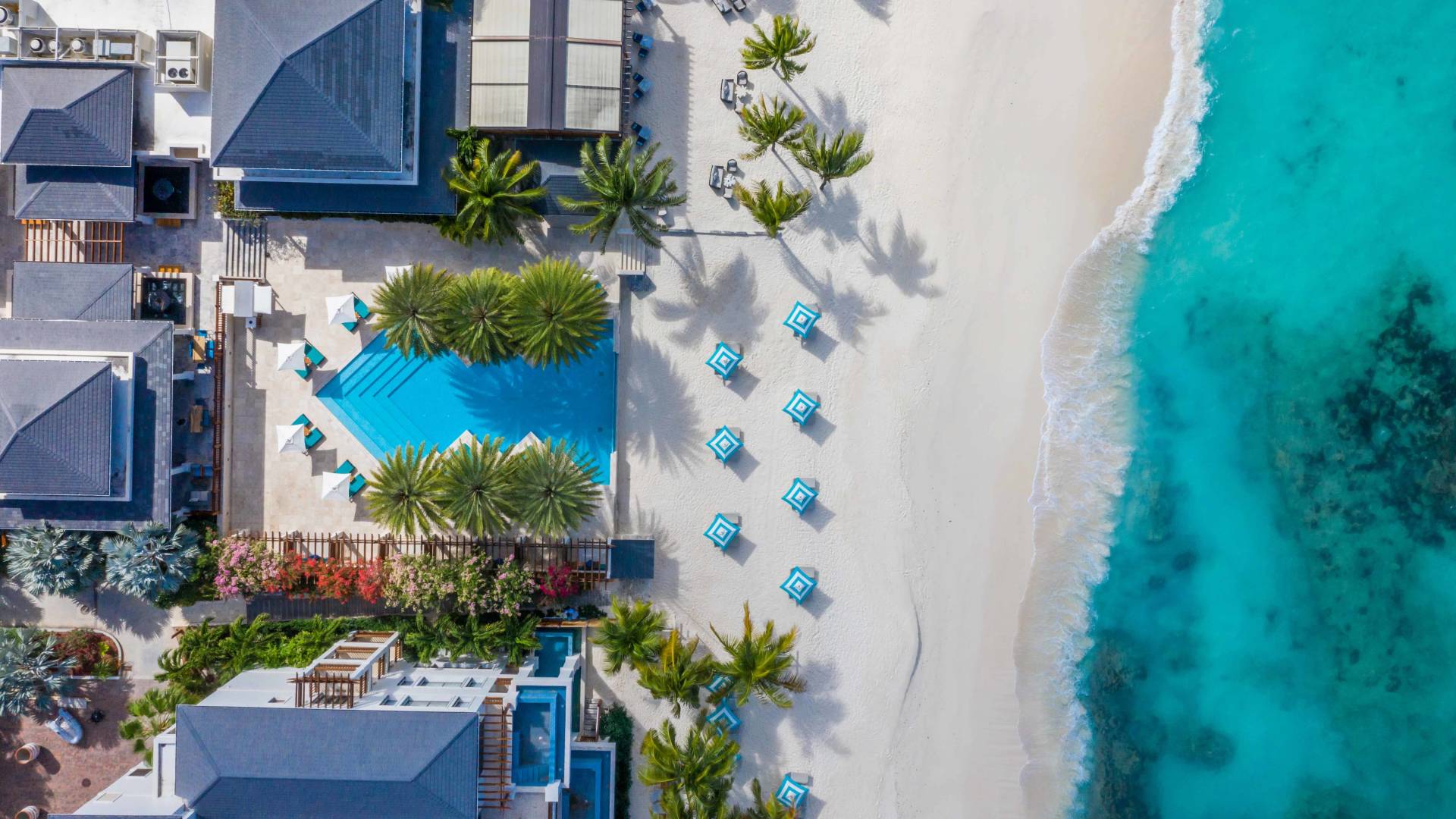
There are 33 beaches, no resort corridor, and no cruise ship port. Shoal Bay East runs along the island’s northern coast, with calm water protected by the reef just offshore. It is the beach most closely associated with Anguilla, and the one many travelers know before they know where they are staying.
Zemi Beach House sits directly on Shoal Bay East across six acres of coastline. Complimentary kayaks, paddleboards, and snorkeling gear make the reef part of the stay. Families have a Kids Club. Couples usually find their way to the beach.
The Thai House Spa is the detail worth telling before the trip. A 300-year-old wooden house was taken apart in Thailand, shipped across the world, and rebuilt here. It remains one of the most distinctive spa settings in the Caribbean. Dining moves between 20 Knots on the beach and Stone for seasonal sea-to-table cuisine.
Not every Caribbean itinerary needs a list of excursions.
Anguilla rarely does.
Before You Build the Itinerary
Mexico, Costa Rica, and the Caribbean are among the most familiar destinations in luxury travel. That familiarity can make them easier to simplify than they deserve.
The Riviera Maya often becomes one recommendation. Los Cabos another. Costa Rica another still. Yet each one contains far more range than a single property can represent. The all-inclusive and the luxury hotel do not always need to be different places. Tulum does not have to revolve around the hotel zone. Los Cabos is not only the Sea of Cortez. Guanacaste is more than the beach at the end of the itinerary. Anguilla asks very little beyond the island itself.
A limpia performed with copal smoke before a spa treatment in the Yucatán. A tunnel carved through granite on the Pacific side of Baja. Honey harvested from native stingless bees in a Blue Zone spa in Guanacaste. A 300-year-old Thai house rebuilt on a Caribbean beach.
Together, they belong to Waldorf Astoria, Conrad, and LXR Hotels & Resorts across Mexico, Costa Rica, and the Caribbean.
Six properties. Three Hilton luxury brands. Six different ways to introduce destinations travelers may think they already know.
Build it with UJV.