
Before the Itinerary Starts
Hawaii is not a destination you simply visit.
The islands are a living U.S. state with deep-rooted indigenous communities, working towns, and cultural protocols that shape how visitors move through them. There are no true all-inclusives. Major experiences require advance planning. Haleakalā on Maui requires a reservation for sunrise. Pearl Harbor books out weeks ahead. The Nā Pali Coast on Kauai needs to be in the itinerary long before arrival. Travelers who fly in expecting to figure it out on the ground will miss the things that make Hawaii worth going to.
The islands are close enough to hop between without the stay feeling like it’s constantly in transit. A 30 to 40 minute inter-island flight separates most of them, and each one changes the experience meaningfully. O’ahu carries the city, the history, and the cultural weight of Honolulu. Maui runs between dramatic coastline and resort luxury. The Big Island holds a landscape that makes everything else look ordinary.
The three combinations below are built around how those differences get used.
The Ritz-Carlton Hotels & Resorts of Hawaii | Two Islands, Three Properties
This combination works because the three properties don’t repeat each other.
O’ahu is where most Hawaii stays begin. Daniel K. Inouye International Airport sits in Honolulu, and Waikiki is about 25 minutes away. The Ritz-Carlton Residences, Waikiki Beach sits 30 steps from the beach, just above Luxury Row. Travelers arriving into Honolulu land in the energy of the city and the property keeps them inside it. Floor-to-ceiling windows, private lanais, gourmet kitchens, and the highest infinity pools in Waikiki give the stay a residential quality that a standard hotel room doesn’t. Sushi Sho, La Vie, and Quiora give travelers three distinct dining directions. This is where the stay starts.
Pearl Harbor is 30 minutes west. Reservations are required and worth building into the first full day before the rest of Waikiki fills the schedule.
The second stop is the North Shore, and the difference is immediate.
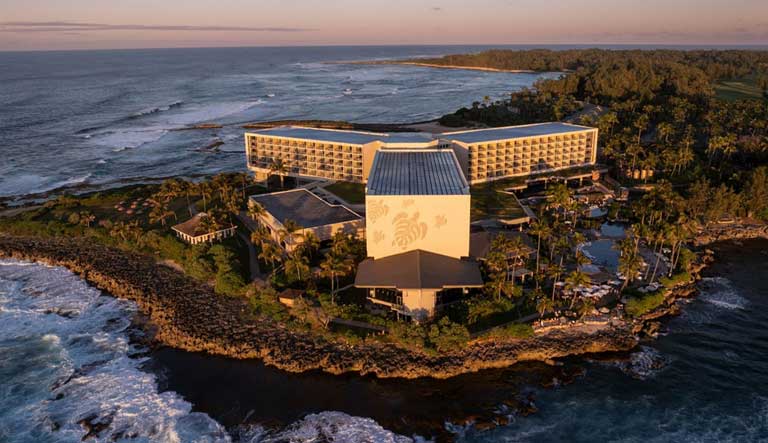
The Ritz-Carlton O’ahu, Turtle Bay sits on nearly 1,300 acres about an hour from Waikiki. Miles of open beach, coastal trails, surf lessons, and guided sessions replace the city energy of the first stop. The bungalows sit closer to the ocean than the main building and give travelers a more private read on the property. Families find their footing here easily. Haleiwa Town, Gunstock Ranch, and the Polynesian Cultural Center are all within reach when the itinerary needs to move. The drive from Waikiki along the H2 and through the pineapple fields is part of the experience. Travelers who skip it and fly directly to Maui miss the version of O’ahu that makes the island feel larger than its resort strip.
Two to three nights in Waikiki. Two to three nights on the North Shore. Then Maui.
Kahului Airport is 40 minutes by inter-island flight from Honolulu. From Kahului, the drive to Kapalua on the northwest coast takes about 45 minutes through the West Maui Mountains. The Ritz-Carlton Maui, Kapalua sits on 54 oceanfront acres with six bays and beaches directly accessible from the property. Championship golf, sunrise yoga, lei making, stargazing, and 70-plus weekly cultural and wellness experiences give travelers enough range to stay on property for the full stretch.
City first. Active coast second. Resort close third.
Three properties, two islands, one itinerary that earns each stop.
Maui | West and South Maui
Most first-time Maui visitors do not realize the island has two distinct sides.
Kahului Airport sits on the north side of the island. From there the destination splits. Drive west and the coastline gets dramatic, the surf more present, and the setting more connected to the landscape. Drive south and the beaches calm down, the sun steadies, and the resort corridor opens up into something more spacious. West Maui and South Maui are about 45 minutes apart by car. They feel like different destinations. The strongest itineraries use both.
West Maui is where the stay begins, and Ka’anapali is the natural opening chapter. The beach is walkable, energetic, and lined with resorts that make the ocean the center of the day. From November through April, humpback whales return to Maui’s warm waters and both the shoreline and the afternoon catamarans become front row seats to one of the Pacific’s most extraordinary migrations.
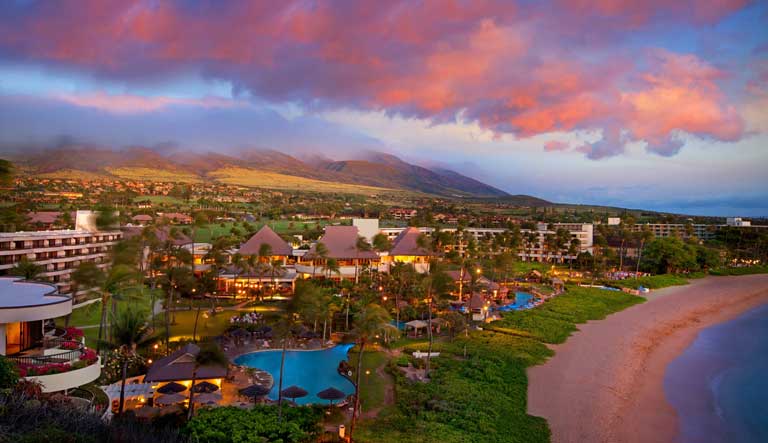
Sheraton Maui Resort & Spa sits at the base of Pu’u Keka’a, better known as Black Rock. The resort curves around the point in a way that keeps the ocean in view from nearly everywhere. Snorkeling at Black Rock is worth building into the first full day. The moment that defines the stay for most travelers is the nightly cliff dive ceremony. As the sun drops, torches are lit along the lava rock and a diver leaps from the point in a tradition that has become one of Maui’s most enduring rituals.
Just down the beach, The Westin Maui Resort & Spa, Ka’anapali brings a different energy. The multi-tiered pool complex, waterslides, quiet coves, and ocean views share the same footprint. The centerpiece is Hōkūpa’a, Ka’anapali’s only luxury concierge tower, offering an elevated lounge, curated culinary presentations, and a more private version of the Ka’anapali experience.
After a few days on the west side, the itinerary shifts south. The drive from Ka’anapali through Lahaina toward Wailea takes about 45 minutes. Lahaina is worth slowing down for. The town continues to recover from the 2023 wildfires, and supporting local businesses is worth building into the day rather than driving past.
South Maui is where the stay settles. Wailea is calmer, sunnier, and more spacious. Wailea Beach Resort, a Marriott property, sits between two of the area’s best beaches. The recently added Villas give families and couples more space and a more residential feel. The Ola Kino Pool gives adults a quieter, wellness-focused option alongside the main pool areas. Most mornings start slow here, which is the point.
Haleakalā is 40 minutes from Wailea. Sunrise reservations need to be secured before arrival, sometimes weeks out. Build it in early.
Three nights in Ka’anapali. Four nights in Wailea. West first. South to close.
The Icons | The Royal Hawaiian, Moana Surfrider & Mauna Kea Beach Hotel
Some Hawaii requests do not start with an island.
They start with a name. The pink palace. The first lady of Waikīkī. The Rockefeller property on the Big Island. Travelers who ask for these properties already know what they want. The job is to show them how the three fit together and why the sequence matters.
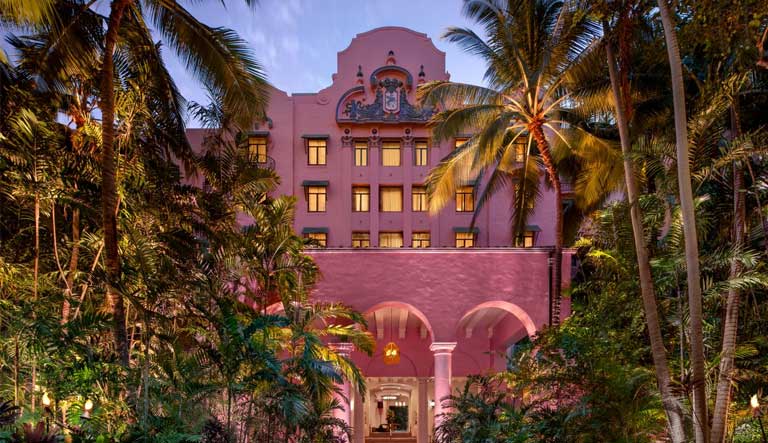
All three are historic. All three have been recently reimagined. And all three carry a version of Hawaii that newer properties cannot replicate.
Waikīkī is where the itinerary opens.
The Royal Hawaiian, a Luxury Collection Resort, Waikiki and Moana Surfrider, A Westin Resort & Spa, Waikiki Beach, sit directly on Waikīkī Beach, steps apart from each other. Some itineraries use both, a few nights at one and a few nights at the other, giving travelers a different experience of the same beachfront. Others choose based on the traveler.
The Royal Hawaiian, open since 1927, suits travelers who want Waikīkī’s history with a quieter feel. Its 15-acre garden setting and exclusive beachfront area give the stay a more private read than most of the strip. Morning pink pancakes at Surf Lanai, evenings at the Mai Tai Bar with live music and ocean views, and the ʻAha ʻĀina Lūʻau on select nights give the stay a cultural layer that most Waikīkī properties cannot offer at this level.
Moana Surfrider, open since 1901 and recently transformed after its 125th anniversary, carries more of Waikīkī’s social energy. The only oceanfront spa in Waikīkī, Moana Lani Spa, gives the afternoons somewhere to land. In the evenings, live pianist David Swanson performs at Vintage 1901, the hotel’s wine bar in the historic lobby. The sets tend to turn the space into something livelier than most hotel bars manage.
Pearl Harbor is 30 minutes from Waikīkī and needs to be reserved well in advance. It belongs in the first full day before the rest of Honolulu fills the schedule.
Three to four nights in Waikīkī gives travelers time to settle into the beachfront before the itinerary moves to the Big Island.
Ellison Onizuka Kona International Airport is about 45 minutes by inter-island flight from Honolulu. From Kona, Mauna Kea Beach Hotel sits about 45 minutes north along the Kohala Coast. Volcanic black rock gives way to one of the most celebrated white sand beaches in Hawaii, Kaunaoa Bay.
Mauna Kea Beach Hotel blends its Rockefeller heritage with refreshed guestrooms, an adult infinity lap pool overlooking the bay, a redesigned family pool, and an oceanfront fitness center, alongside Spa at Mauna Kea Beach Hotel, a 22,000-square-foot indoor-outdoor retreat rooted in Hawaiian healing traditions. The museum-worthy art collection woven throughout the property gives travelers something to discover beyond the beach. Snorkel gear, surfboards, and outrigger canoe experiences are built into the stay. After sunset, manta ray snorkeling in Kaunaoa Bay is one of the more specific and memorable experiences available on the Kohala Coast.
Waimea is a short drive inland, a paniolo (Hawaiian cowboy) town surrounded by rolling pastures and volcanic peaks. The farmers markets here are among the best on the islands, and Merriman’s Restaurant, where the farm-to-table movement in Hawaii effectively began, is worth a dinner reservation for clients who want the Big Island’s agricultural story.
Hapuna Beach is minutes away. The drive up the Kohala Coast gives travelers the Big Island beyond the resort. Stargazing from the property’s elevation, with Mauna Kea Observatory not far above, adds a layer that no Waikīkī property can offer.
Four nights at Mauna Kea Beach Hotel closes the itinerary with a version of Hawaii that feels completely different from Waikīkī.
Iconic beachfront first. Historic Big Island close.
The Takeaway
Hawaii isn’t one conversation.
It requires more planning upfront than most destinations. Setting expectations around cultural respect, advance reservations, and the real difference between island hopping and island settling. Understanding which side of Maui fits the traveler. Knowing that the North Shore of O’ahu and the Kohala Coast of the Big Island are two completely different versions of Hawaii from what most people picture when they ask for it.
These three combinations give advisors a strong starting point. Each one has a clear sequence, a clear traveler fit, and properties that earn their place in the itinerary.
UJV builds Hawaii alongside you. The island-to-island coordination, the property sequencing, and the itinerary support are all part of how we work.